
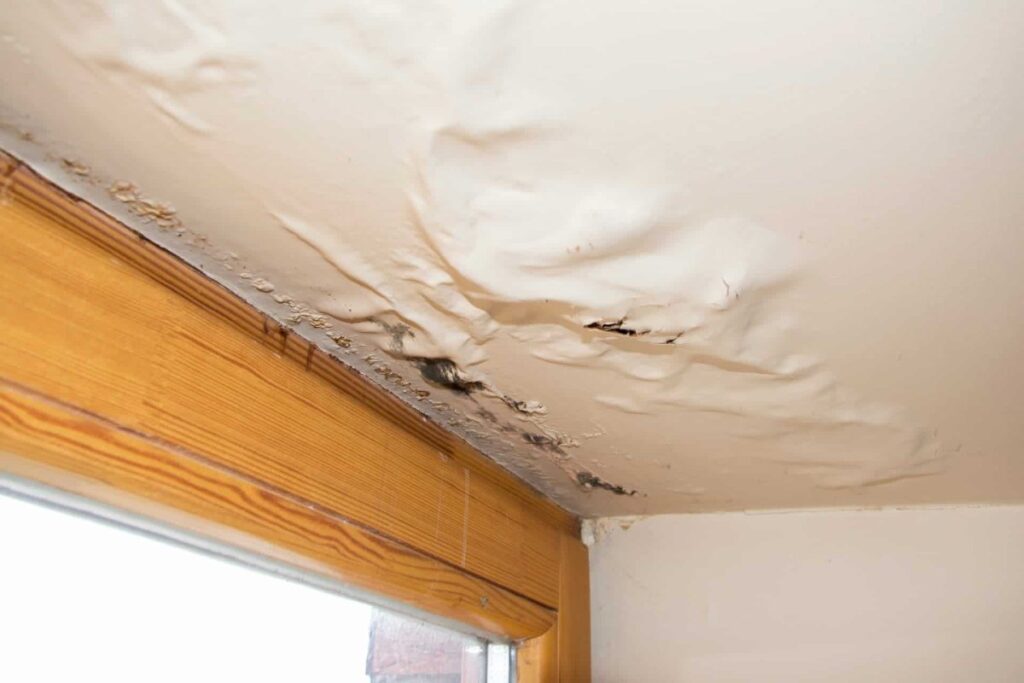
Ceiling stains are one of the most confusing and frustrating issues homeowners face. A storm may have passed weeks ago, a minor roof issue may have seemed resolved, and everything appeared fine—until a yellow, brown, or dark ring suddenly shows up overhead. Many homeowners ask why ceiling stains appear later instead of immediately after a leak.
The answer lies in how water behaves inside your home’s structure. Unlike a burst pipe or overflowing fixture, roof-related moisture moves slowly, hides easily, and often takes time before becoming visible.
Understanding why water damage on ceilings often takes weeks to appear can help you recognize signs of a hidden roof leak, take action sooner, and prevent costly long-term damage.
This guide breaks down 10 reasons delayed ceiling water damage occurs and explains why calling an expert roofer for a professional roofing inspection is critical.
1. Water Travels Before It Shows
One of the biggest misconceptions about roof leaks is that water drips straight down from the source. In reality, water almost never takes a direct path. When rain enters through damaged shingles, flashing, or roof penetrations, it often travels along rafters, trusses, roof decking, and framing before reaching your ceiling.
This movement can take days or even weeks. Water may spread horizontally across wood surfaces, soaking materials gradually. By the time it finally reaches drywall, the original leak may feel like a distant memory.
Homeowners often believe the issue is new, when in fact the damage has been developing quietly the entire time.
2. Moisture Gets Trapped Above the Ceiling
Your ceiling is not just drywall—it’s part of a layered system that includes insulation, vapor barriers, framing, and attic space. When water enters this system, it often becomes trapped.
Moisture may sit above the ceiling line with nowhere to go. Instead of dripping, it slowly saturates surrounding materials. Over time, this trapped moisture weakens drywall, darkens insulation, and creates ideal conditions for mold growth.
Because the water is hidden, there are usually no immediate warning signs.
3. Insulation Delays Visible Damage
Insulation is designed to regulate temperature—but it also acts like a sponge. When water reaches insulation, especially fiberglass or blown-in insulation, it absorbs and holds moisture.
This absorption slows the appearance of visible damage. Instead of dripping onto the ceiling surface, water remains trapped in the insulation, slowly transferring moisture to the drywall below.
In many cases, insulation can remain wet for weeks, especially if attic ventilation is poor. During this time, homeowners may notice nothing at all—until a stain suddenly forms.
This delayed effect explains why water stains on ceiling surfaces often show up long after the rainstorm that caused them.
4. Drywall Absorbs Water Slowly
Drywall does not always show damage immediately. Unlike surfaces such as wood flooring or carpet, drywall can absorb moisture gradually without obvious signs.
At first, drywall may simply feel slightly damp. As moisture continues to build, the paper backing begins to discolor, forming faint yellow or brown stains. Eventually, the stain darkens and expands, becoming impossible to ignore.
5. Humidity Reactivates Hidden Moisture
In areas like North Texas, humidity plays a major role in delayed ceiling stains. Even after water intrusion stops, residual moisture may remain inside ceiling materials.
When humidity rises—common during warm weather—this hidden moisture can become active again. It spreads, darkens stains, and sometimes causes bubbling or peeling paint.
This is a key reason why ceiling stains appear later, especially during seasonal temperature and humidity changes. What seemed dry may never have fully dried out.
6. Leaks Don’t Always Drip Straight Down
Roof leaks often enter at one point and emerge somewhere entirely different. Water may follow nails, screws, framing joints, or sloped surfaces before reaching the ceiling.
As a result, ceiling stains may appear far from the actual roof damage. This makes diagnosing the problem difficult.
Homeowners may patch a visible stain without realizing the true leak source remains active.
7. Stains Appear After Materials Dry
Another surprising factor is that stains often become visible after materials begin to dry. As moisture evaporates, minerals and contaminants within the water are left behind, creating discoloration.
This is why ceiling stains sometimes appear after a stormy period ends rather than during it. The drying process concentrates staining compounds, making damage more noticeable over time.
8. Small Leaks Cause Delayed Damage
Not all roof leaks are dramatic. In fact, the most damaging leaks are often small and slow. A tiny opening around flashing or a single compromised shingle may allow water to enter gradually.
Because the leak is minor, it may not cause immediate dripping or obvious water intrusion. Instead, moisture accumulates slowly, eventually leading to stains weeks later.
These slow leaks are among the most dangerous, as they can cause rot, mold, and structural issues before being detected.
9. Temperature Changes Expose Old Leaks
Temperature fluctuations cause roofing materials to expand and contract. Over time, this movement can reopen sealed areas or worsen small vulnerabilities.
Additionally, temperature changes inside your attic can cause condensation, which adds moisture to already damp materials. This combination often exposes old leaks that were previously hidden.
Homeowners may notice ceiling stains during seasonal transitions, even if there hasn’t been recent rain. This does not mean the damage is new—it means existing moisture is finally revealing itself.
10. Ceiling Stains Signal Ongoing Moisture
A ceiling stain is rarely just a cosmetic issue. In many cases, it signals ongoing moisture problems that require immediate attention.
Ignoring stains can lead to:
- Mold growth
- Compromised insulation
- Wood rot
- Structural weakening
- Reduced energy efficiency
Why Professional Roof Inspections Matter
Because delayed ceiling stains are complex, identifying the true source of the problem requires experience.
A professional inspection goes beyond surface-level observations and examines:
- Shingles and flashing
- Roof penetrations
- Attic moisture levels
- Insulation condition
- Ventilation performance
An expert roofer can determine whether stains are caused by an active leak, old damage, or condensation issues—and recommend the correct solution.
Your Trusted Local Roofing Experts in Aledo, TX
For homeowners dealing with ceiling stains and suspected roof leaks, working with a knowledgeable local company makes all the difference.
Greenlight Roofing and Remodeling is a trusted roofing company serving Aledo, Hudson Oaks, TX, and surrounding areas across Parker County, Tarrant County, and Johnson County.
With 30 years of combined experience, Greenlight Roofing and Remodeling provides residential and commercial roofing services backed by industry credentials. As an Owens Corning Preferred Contractor and Certified Master Shingle Applicator, the team delivers reliable solutions focused on long-term performance and energy efficiency.
Whether you need a detailed roof evaluation or suspect hidden damage, scheduling a professional roofing inspection can help protect your home before minor issues become major repairs.
Conclusion: Why Delayed Ceiling Stains Should Never Be Ignored
Ceiling stains that appear weeks after a leak are not random or harmless. They are the result of slow-moving water, trapped moisture, insulation absorption, and environmental changes working together over time.
Understanding why water damage on ceilings often takes weeks to appear empowers homeowners to act quickly, avoid further damage, and protect their investment.
If you notice stains, discoloration, or other signs of a hidden roof leak, the safest step is to consult an experienced roofing professional.
Contact us today at 817-612-9585 or reach our Facebook page. Prompt attention today can prevent extensive repairs tomorrow—and ensure your home stays dry, efficient, and structurally sound for years to come.
Frequently Asked Questions
Why do ceiling stains appear weeks after a roof leak?
Ceiling stains appear later because water travels slowly through roofing materials, insulation, and framing before reaching drywall. Moisture often remains hidden above the ceiling for weeks.
Can water damage show up even after a leak is fixed?
Yes. Residual moisture trapped in insulation or drywall can cause water damage weeks after leak repairs, especially during humidity or temperature changes.
Are ceiling stains always caused by roof leaks?
Not always, but roof leaks are the most common cause. Other causes include condensation, poor ventilation, or plumbing issues. A professional roofing inspection helps identify the true source.
What are the signs of a hidden roof leak?
Signs include yellow or brown ceiling stains, peeling paint, musty odors, sagging drywall, and stains that grow after rain or humidity changes.
Is ceiling water damage dangerous?
Yes. Ongoing ceiling water damage can lead to mold growth, weakened structural materials, and reduced energy efficiency if not addressed promptly.
When should I call a roofing contractor for ceiling stains?
You should contact a roofing contractor as soon as stains appear, even if they seem minor. Early inspections prevent costly long-term damage.