
When you think about the health of your roof, you probably picture strong shingles, leak-free flashing, and maybe a fresh coat of paint. But there’s an invisible element that is vital to keeping your roof—and your entire home—in top shape: air movement.
It might not be glamorous, but roof ventilation is absolutely essential. It’s the constant, gentle breathing of your home, and without it, big problems can build up over time. If you live in Aledo, Hudson Oaks, or anywhere in Parker, Tarrant, or Johnson County, you know how intense our Texas weather can be. That makes proper roof airflow even more critical.
At Greenlight Roofing and Remodeling, we don’t just fix roofs; we’re Energy Efficiency experts who understand that a healthy roof is a system. With our 30 years of combined experience, we know that the system starts with good airflow.
What Roof Ventilation Really Means for Your Home: It’s More Than Just a Hole
What exactly is roof ventilation? Simply put, it’s a balanced system of openings that allow fresh, outside air to enter your attic and warm, moist air to escape. Think of your attic as a giant lung for your house.
This isn’t about letting a draft in; it’s a carefully designed process that uses natural convection (hot air rising) to constantly replace the air inside your attic. The goal is to keep the air temperature and moisture level in the attic as close as possible to the air outside, especially during peak temperature swings.
For homeowners in Texas, an effective residential roof ventilation system is a non-negotiable part of roof health and airflow. It’s the difference between an attic that bakes your house all summer and one that stays relatively cool. It’s a core service that any reputable roofing company, like Greenlight Roofing and Remodeling, focuses on during an inspection or installation.
Why Good Airflow Is the Secret to a Strong Roof (And a Lower Energy Bill!)
The benefits of proper roof airflow are two-fold: structural protection and energy savings. These two aspects are deeply connected, and ignoring one always hurts the other.
1. Protecting Your Roof in the Summer
In the summer, the sun beats down on your roof. Without proper ventilation, the temperature in your attic can easily climb up. This intense heat does serious damage:
- Shingle Damage: Extreme heat bakes and prematurely ages your shingles. It causes them to curl, crack, and lose their granules, which are the protective bits that reflect UV rays. This shortens the lifespan of your entire roof dramatically.
- Decking and Rafter Damage: The heat radiates down, slowly drying out and weakening the wooden structure (decking and rafters) underneath.
- AC Overload: The superheated air in the attic pushes down into your living space. Your air conditioner has to run longer and harder to fight this extra heat load, leading to higher energy bills.
Good attic ventilation works to exhaust that super-heated air, keeping the temperature much lower and protecting all your roofing materials. As experts in Energy Efficiency, we can tell you this is one of the quickest ways to see a dip in your monthly cooling costs.
2. Protecting Your Home in the Winter
While it might seem less urgent in the winter, ventilation is just as vital. When warm, moist air from your home (from cooking, showering, and laundry) rises into a cold, unventilated attic, it condenses.
- Moisture & Mildew: This condensation creates a damp environment, which is the perfect breeding ground for mildew and mold, which can compromise the air quality in your home.
- Insulation Damage: Moisture saturates your insulation, drastically reducing its effectiveness. Wet insulation does little to keep your house warm, forcing your heating system to work harder.
- Ice Dams (Less Common in TX, but still a risk): Uneven heat from a poorly ventilated attic can melt snow on the roof, which then refreezes at the cold eaves, creating damaging ice dams.
A balance of intake and exhaust ensures that moisture never has a chance to settle and cause damage to the structure or the materials.
Summer Heat & Winter Moisture: Common Problems Caused by Poor Roof Ventilation
It’s easy to tell if you’re one of the many homeowners suffering from poor airflow. The symptoms are often obvious, and a thorough roof ventilation inspection from a roofer can confirm the issue.
Here are the most common signs you need to call a professional:
- Sky-High Energy Bills: This is the most common and expensive symptom. If your AC unit is always running, especially in the afternoon, your attic is likely acting like an oven.
- Sagging or Distorted Shingles: If you notice shingles that look “wavy” or are curling upwards at the edges, it’s often a sign of excessive heat aging and moisture absorption.
- Moisture or Frost in the Attic: If you can see condensation on the underside of your roof deck, especially near the rafters, or if the nails look rusted, you have a major moisture problem.
- Peeling Exterior Paint: In extreme cases, moisture trapped in the attic can work its way into the fascia and exterior walls, causing paint to bubble and peel prematurely.
Ignoring these issues can lead to needing major, costly structural repairs down the road. If you’re seeing any of these signs in Aledo, Hudson Oaks, or surrounding areas, contacting roofing ventilation experts like Greenlight Roofing and Remodeling right away is the smart move.
Key Components of an Effective Roof Ventilation System: The Two-Part Solution
A truly effective roof ventilation system is a balance of two essential components: Intake and Exhaust. You can’t have one without the other, or the system won’t work correctly.
1. Intake Vents (The Bottom)
Intake vents are where fresh, cool air enters the attic. They are usually located low on the roof, often under the eaves, and are called soffit vents.
The function of the intake is simple: provide a sufficient source of outside air to push the hot, stale air up and out. If your soffit vents are blocked by insulation or have been painted over, the entire system grinds to a halt.
2. Exhaust Vents (The Top)
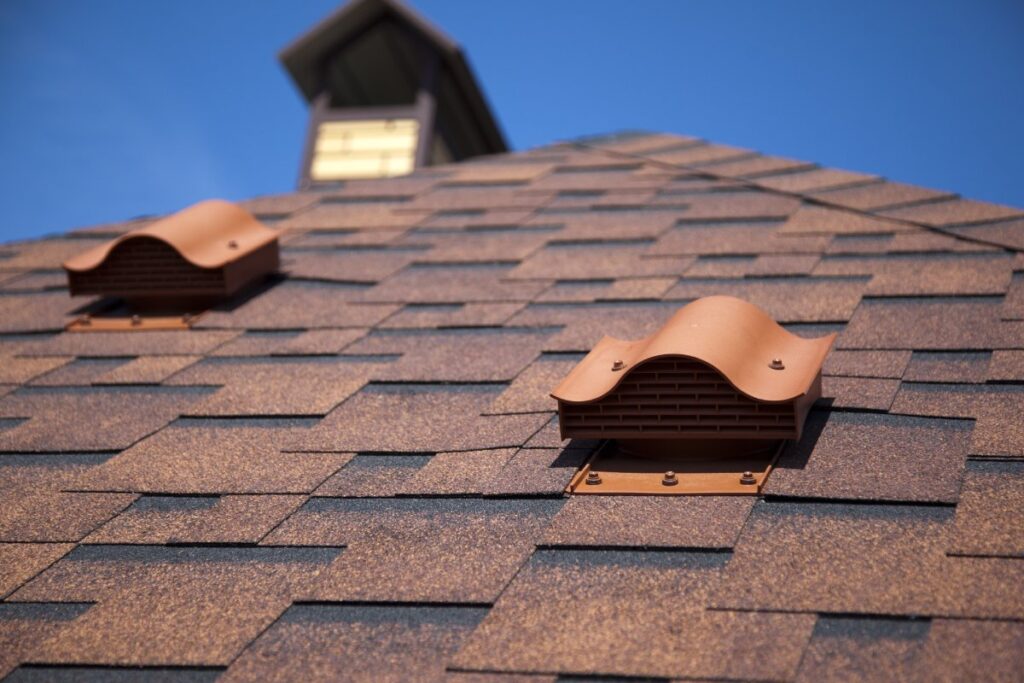
Exhaust vents are where the hot, moist air leaves the attic. They are located near or at the peak of the roof. There are several types of exhaust vents, but the most effective is often the ridge vent.
- Ridge Vents: Installed along the entire peak (ridge) of the roof, these provide continuous, uniform exhaust. Because they are the highest point, they take advantage of the natural tendency for hot air to rise.
- Gable Vents or Static Vents: These are less efficient than a ridge vent, but are sometimes used. However, mixing vent types can often disrupt the delicate balance of the system.
A proper system must have a balanced amount of both intake and exhaust. As a Certified Master Shingle Applicator and Owens Corning Preferred Contractor, Greenlight Roofing and Remodeling always designs systems to maximize this balance for optimal roof airflow.
From Vents to Fans: How Roofing Professionals Ensure Proper Airflow
A homeowner can’t just tack a vent onto their roof and call it a day. Ensuring proper, balanced attic ventilation requires a specialized eye. This is where partnering with a professional roofing contractor becomes invaluable.
When Greenlight Roofing and Remodeling assesses your roof, we focus on a few key steps to ensure long-term roof health and airflow:
- Calculating Airflow Needs: The amount of ventilation needed is based on the attic’s size. We use established industry standards to calculate the required Net Free Area (NFA) for both intake and exhaust to ensure they are perfectly balanced.
- Addressing Insulation: We check that the insulation (often fiberglass or blown-in cellulose) is not blocking the soffit vents. This is a common issue that chokes the intake and completely stops the system from working.
- Choosing the Right Components: We recommend and install high-quality, continuous ridge vents and ensure your existing soffit vents are clear and functioning. For large, complex, or low-slope attics, we may recommend powered attic fans, though we always prioritize passive (non-electric) solutions first for maximum efficiency.
- Full-System Inspection: Our roofing ventilation experts will examine the whole roof, from the decking to the flashing, to ensure every component is working together to protect your home.
Whether you need a full replacement or just a ventilation upgrade, hiring professional roofing services ensures the work is done right the first time, protecting your investment for years to come.
The Long-Term Benefits of Proper Roof Ventilation: Saving Money and Adding Life
Investing in good roof ventilation is not an expense—it’s a long-term investment in your home’s value and efficiency. The benefits pay for themselves over time, which is why we, as a trusted local roofing company in Aledo, TX, and Hudson Oaks, TX, always stress its importance.
- Extended Roof Life: By protecting your shingles and underlying decking from extreme temperature swings, you can add years to the life of your roof. This means delaying a costly full replacement, which is the ultimate way to save money.
- Reduced Energy Costs: You’ll immediately notice the difference in your monthly electric bill as your AC unit struggles less to cool a superheated home.
- Warranty Protection: Most roofing material warranties, including those offered by major manufacturers, actually require a properly ventilated attic. If you have a ventilation failure, it could void your warranty!
- Healthier Home: Reducing excess moisture eliminates the threat of mold and mildew, leading to cleaner, healthier air inside your living space.
Conclusion: Keep Your Roof Strong with Proper Ventilation
Your roof is one of the biggest investments you’ll make in your home. Protecting that investment boils down to ensuring one crucial, simple element is working correctly: proper roof airflow.
For those of us in Parker County, Tarrant County, and Johnson County, dealing with intense sun and dramatic humidity changes, a robust attic ventilation system isn’t a luxury—it’s a necessity.
If you have questions about your current system, are noticing high energy bills, or are planning a new roof installation, don’t wait for the heat or moisture to cause irreversible damage. Call the roofing contractor who understands roof health and airflow as an essential system.
As your trusted, local roofer and Energy Efficiency experts, Greenlight Roofing and Remodeling is here to help. Contact us today at 817-612-9585 or reach our Facebook page for a comprehensive roof ventilation inspection and let us show you why good airflow is the key to keeping your roof strong for decades to come.
Frequently Asked Questions
What is the most important component of a proper roof ventilation system?
The most critical component is balanced airflow, meaning you must have an equal amount of intake ventilation (usually from soffit vents at the eaves) and exhaust ventilation (usually a ridge vent at the peak). Without this balance, proper roof airflow cannot be established, leading to trapped heat and moisture that damage your roof and raise energy bills. A local roofing company like Greenlight Roofing and Remodeling can assess your balance.
How often should I get a professional roof ventilation inspection?
It is recommended to have a full roof ventilation inspection conducted by roofing ventilation experts at least once every three to five years, or anytime you notice signs of poor airflow, such as unusually high energy bills or moisture build-up in your attic. If you are scheduling other professional roofing services, like shingle repair, ask your roofer to check the vents at the same time.
Does proper attic ventilation really save money on energy costs?
Absolutely. Proper attic ventilation is one of the most effective ways to lower your energy costs, especially in hot climates like Aledo and Hudson Oaks, TX. By allowing super-heated air to escape, the ventilation keeps the attic temperature cooler, significantly reducing the strain on your air conditioner and decreasing cooling costs. This improves your home’s Energy Efficiency.
What are the signs of poor residential roof ventilation?
Common signs of poor residential roof ventilation include excessively high summer cooling bills, premature deterioration or curling of your shingles, the presence of mold or mildew in the attic, or condensation (frost in winter) on the underside of your roof deck. If you notice any of these issues, contact a trusted roofing contractor immediately for a diagnosis.
Can a poor roof ventilation system void my roof warranty?
Yes, in many cases, it can. Most major shingle manufacturers (like Owens Corning) require a properly installed and functioning roof ventilation system as a condition of their material warranty. If extreme heat or moisture damage caused by poor roof ventilation leads to shingle failure, your warranty claim may be denied. Always work with a certified installer like Greenlight Roofing and Remodeling.
What is the difference between an attic fan and a ridge vent?
A ridge vent is a passive form of roof ventilation installed along the entire peak of the roof, relying on rising hot air (convection) to exhaust the heat. An attic fan is an active, mechanical device that uses electricity to forcibly pull air out. While fans can work well, passive systems like ridge vents, when combined with proper intake, often provide quieter, more consistent, and more energy-efficient roof airflow.